The Submission
The exciting hunch loses. The agent who reads the pattern wins.
See what your students get, and why it lands.
No mockups. Every page below is real, pulled straight from the files you download. Tap any one to see it full size.
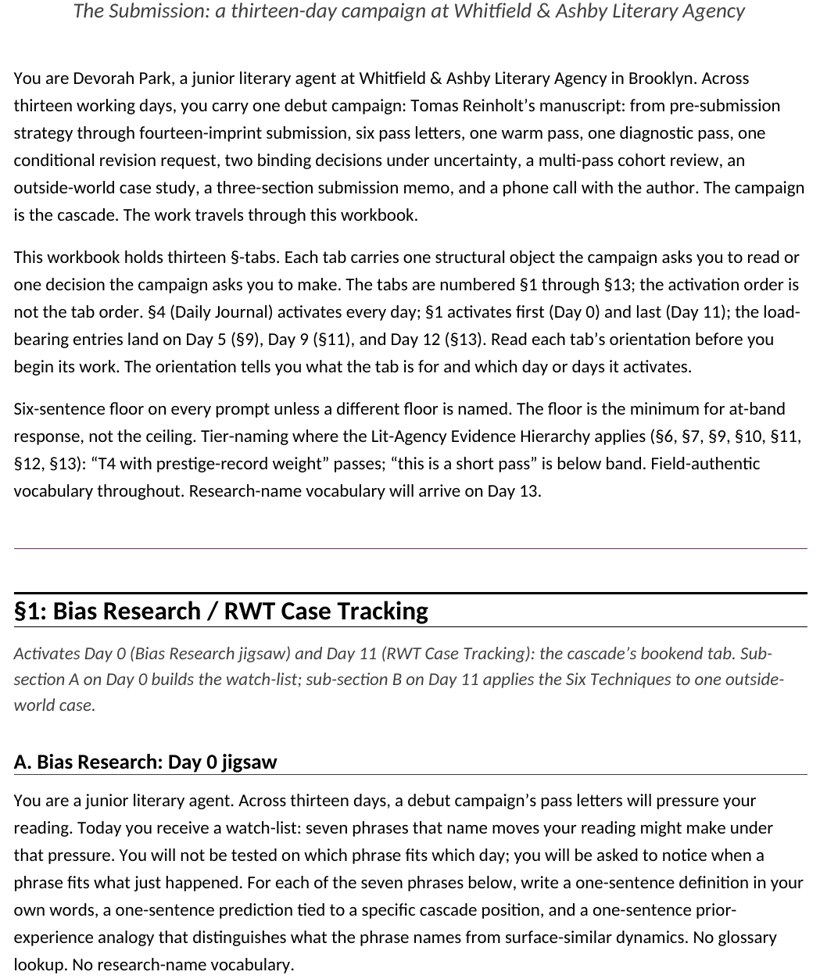
Your students are not answering questions. They are calling a campaign.
Open the student Workbook and there is no comprehension quiz waiting. Your students sit in the chair of Devorah Park, a junior agent at Whitfield and Ashby, running the submission campaign for a debut novel called The Quiet Inheritance. Each day a new pass letter arrives from a real-feeling editor. Your students read it, classify it on the Lit-Agency Evidence Hierarchy, and log what the file actually establishes against what it merely sounds like. They write a binding decision in at least six sentences. The page does not ask them what the letter means. It asks them what they are going to do about it, and it holds them to that call when the next letter lands.
Tap to open the student workbook
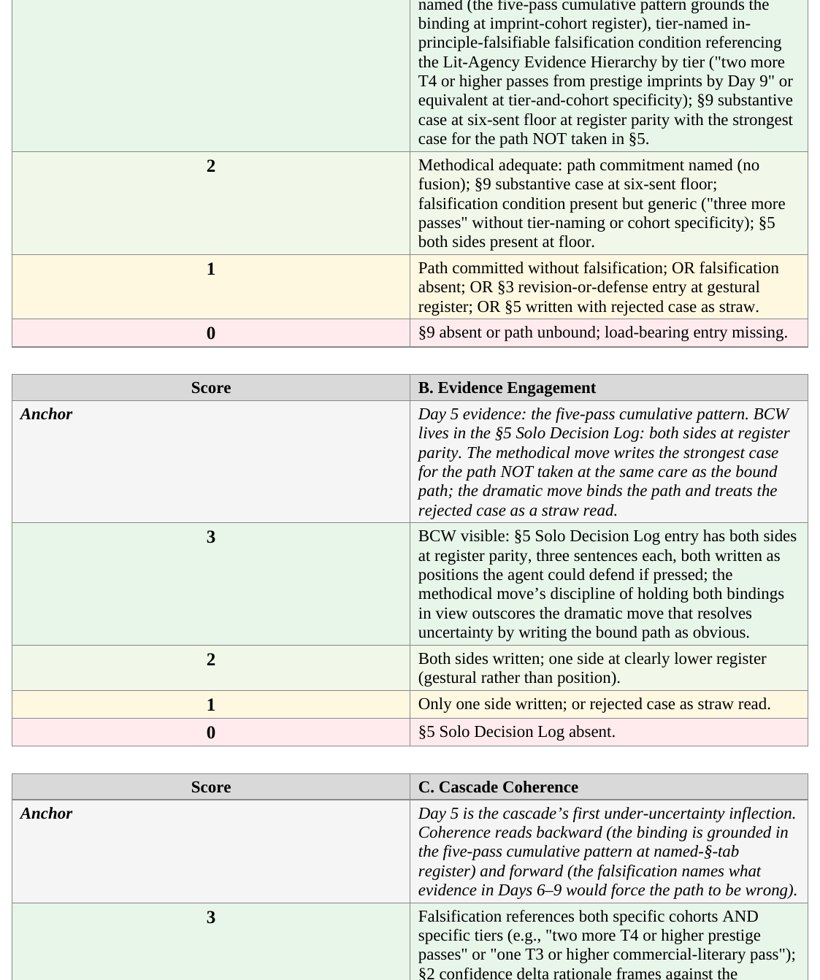
They are scored on how they reasoned, not on whether they guessed right.
The Daily Rubric, worth up to 126 points, rewards process, not outcome. A student who reads Rita Mehlhorn's eight-word terminal pass, weighs it against the prestige record of a 28-year veteran, and logs a measured update earns top-band marks. A student who panics, abandons the campaign, and happens to land on a defensible path does not. The rubric makes the boring, methodical move the high-scoring move. It credits tier-naming, falsification targets, and evidence carried forward from the day before. Your students learn fast that a sound process behind a cautious call beats a lucky instinct, because the points only ever follow the reasoning.
Tap to read the grading rubric
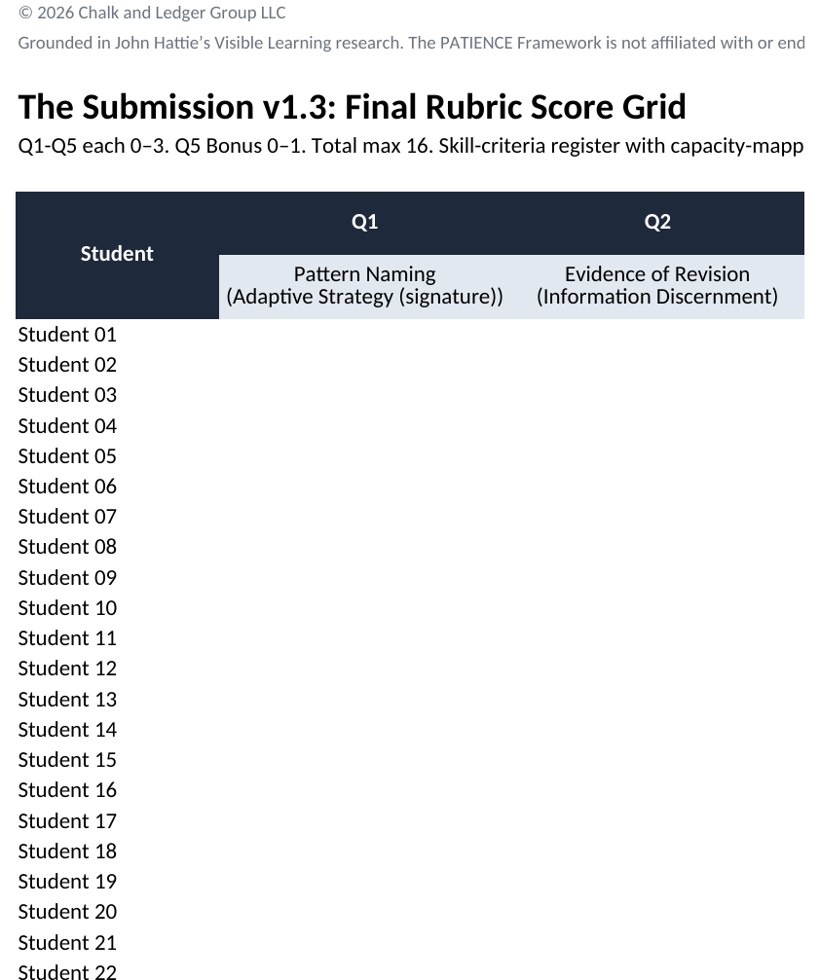
Let the Tracker hold the paperwork so judgment gets the energy.
The Tracker spreadsheet carries the bookkeeping a real campaign would bury an agent in. Every pass gets logged by tier, every imprint gets tracked, and the cumulative pattern builds across the 13 days in tabs your students can scan in seconds. They do not recopy data or rebuild the picture each morning. The tool surfaces the trend so the human work, deciding whether the strategy is still holding, is where the period goes. When your students open the Diagnosis check at the top of the day, the Tracker shows whether yesterday's logic came forward intact. The spreadsheet does the remembering. Your students do the thinking.
Tap to see the tracker
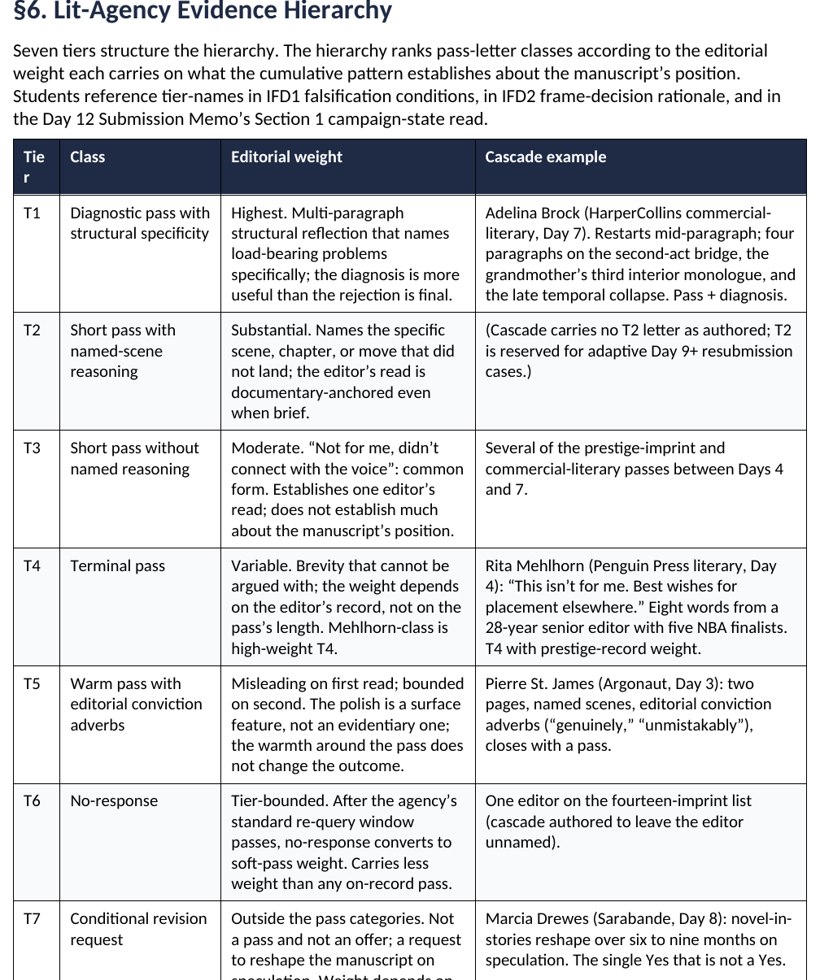
Every day is scripted to the minute. You bring the room.
The Teacher Guide runs each 50-minute period on the DIIE rhythm: Diagnosis, Intervention, Implementation, Evaluation. You get the timings, the talking points, and the exact Mandatory Touch Points where you surface a dynamic out loud. Day 3 tells you when to press on the warm pass. Day 4 tells you how to handle the student who treats one terminal pass as a verdict. The guide scripts the story installments, the discussion prompts, and the where-to-next callout that closes the room. Your prep is light because the sequence is already built. The facilitation is yours, the architecture is in the box.
Tap to read the teacher guide
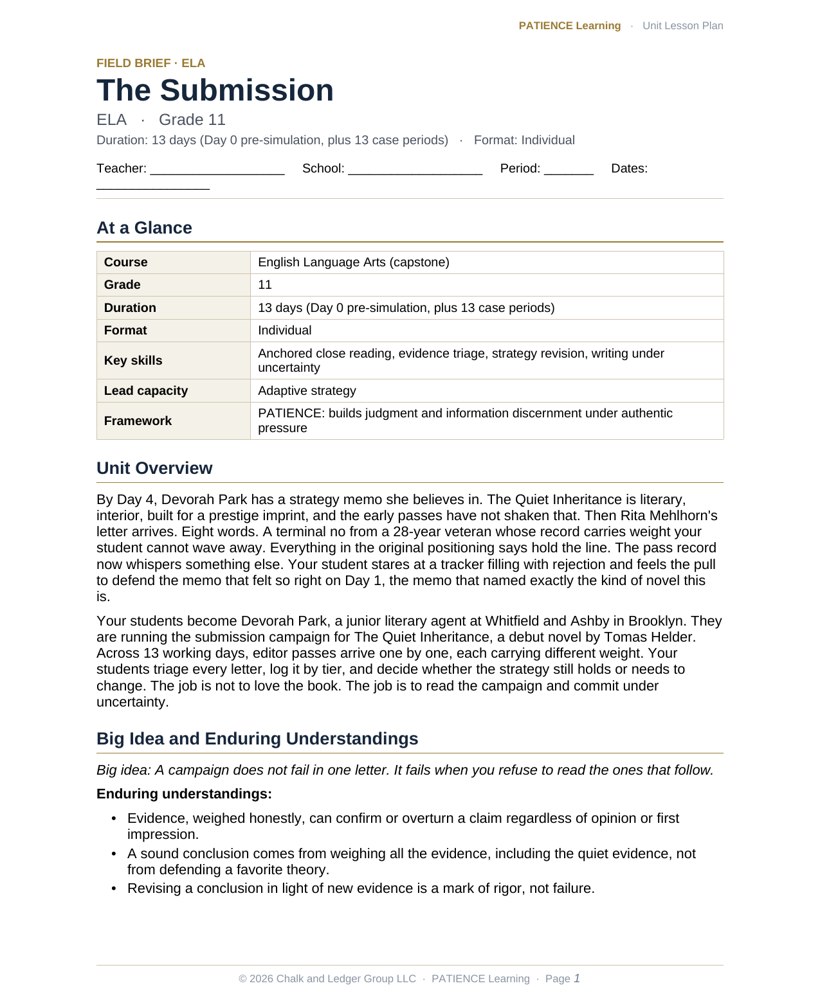
The lesson plan is already written.
Every simulation comes with a fully editable, admin-ready lesson plan. Standards alignment, daily pacing, learning objectives, differentiation, and an assessment plan are already done, so you can hand it to an administrator or adapt it to your district template in minutes.
Tap to preview the lesson plan
Close
Close
Close
Close
The day the working theory stops being a verdict and becomes a question.
By Day 4, Devorah Park has a strategy memo she believes in. The Quiet Inheritance is literary, interior, built for a prestige imprint, and the early passes have not shaken that. Then Rita Mehlhorn's letter arrives. Eight words. A terminal no from a 28-year veteran whose record carries weight your student cannot wave away. Everything in the original positioning says hold the line. The pass record now whispers something else. Your student stares at a tracker filling with rejection and feels the pull to defend the memo that felt so right on Day 1, the memo that named exactly the kind of novel this is.
At the pivot your student has to choose between protecting the theory and reading the file. The comfortable move is to call Mehlhorn an outlier and keep submitting to the same shelf. The disciplined move is to write the strongest case for revising the approach before defending it, the way the Day 7 stress test will demand. When your student trusts the cumulative pattern over the original conviction, the campaign changes shape. A conditional request from Marcia Drewes that looked like a distraction now reads as a real path. The evidence was talking the whole time.
A debut novel, a Brooklyn agency, and 13 days to read the market.
Your students become Devorah Park, a junior literary agent at Whitfield and Ashby in Brooklyn. They are running the submission campaign for The Quiet Inheritance, a debut novel by Tomas Helder. Across 13 working days, editor passes arrive one by one, each carrying different weight. Your students triage every letter, log it by tier, and decide whether the strategy still holds or needs to change. The job is not to love the book. The job is to read the campaign and commit under uncertainty.
| Grade level | 11 |
| Course | English Language Arts (capstone) |
| Duration | 13 days (Day 0 pre-simulation, plus 13 case periods) |
| Format | Individual |
| Key skills | Anchored close reading, evidence triage, strategy revision, writing under uncertainty |
Engineering better thinkers.
Discernment is the whole job here. Your students must separate what a file establishes from what it sounds like, then commit before they are certain. Each day pairs a named thinking trap with the capacity that defeats it, so the habit is built before it is ever labeled on Day 13.
| Bias targeted | The remedy, built into the work |
|---|---|
| Anchoring | Adaptive strategyThe Day 1 positioning memo wants to filter every later pass. Your students learn to read early evidence as a position to test, not a verdict to defend, and to revise when the pattern turns. |
| Confirmation bias | MetacognitionFaced with an imprint match, students notice themselves filtering passes to confirm the original strategy, then write what the evidence actually says instead of what they hoped it would. |
| Sunk cost fallacy | Adaptive strategyBy Day 6 the campaign has real effort behind it. Students learn to read prior commitment as a consideration, not a reason to continue down a failing path. |
| Halo effect | Information discernmentPierre St. James sends a warm, polished two-page pass on Day 3. Students learn that conviction adverbs and kindness do not change the outcome, and they log it as the no it is. |
| Framing effect | Ethical reasoning and stakeholder awarenessThe same request reads differently from the author's chair than the editor's. Students name whose stakes are in view before deciding what the request actually demands of the agent. |
| Status quo bias | Navigating uncertaintyOn the Day 7 stress test, students must argue the strongest case for changing the working approach before defending it, refusing the comfort of the shape they already know. |
13 days of pass letters and binding calls.
Day 0 sets the agency, the book, and the evidence hierarchy through a jigsaw. From there the campaign cascades: working days build the pass record, and inflection days force commitments under uncertainty. The pattern accumulates until the strategy your students started with has to be defended, revised, or abandoned on the evidence.
| Day | What lands | Skill in focus |
|---|---|---|
| 0 | Jigsaw onboarding: the agency, the book, the evidence hierarchy | Anchored close reading |
| 1 | The campaign opens; first passes enter the tracker | Evidence intake |
| 2 | General associate-level passes from major imprints | Pass-letter triage |
| 3 | Pierre St. James sends a warm, polished pass | Voice vs substance |
| 4 | Rita Mehlhorn's eight-word terminal pass (critical pivot) | Hypothesis-aware reading |
| 5 | First inflection: students bind to a working path under uncertainty (IFD1) | Navigating uncertainty |
| 6 | The list narrows; sunk-effort pressure builds | Sunk-effort recognition |
| 7 | Adelina Brock's diagnostic pass and the strategy stress test (critical pivot) | Strategy stress-testing |
| 8 | Marcia Drewes requests a novel-in-stories reshape | Stakeholder framing |
| 9 | Second inflection: the adaptive resubmission decision (IFD2) | Adaptive strategy |
| 10 | The audit: reading the path not taken against the one chosen | Retrospective discipline |
| 12 | The Submission Memo with a tier-named falsification condition | Writing under uncertainty |
| 13 | The Reveal: the research names behind every move are unlocked | Metacognition |
Standards alignment.
The Submission is built on grade-band Common Core anchors. Students cite textual evidence and draw inferences from each pass letter under CCSS.ELA-LITERACY.RI.11-12.1, and they analyze how rhetorical style shapes a text under RI.11-12.6. The daily binding decisions and the final Submission Memo are argument writing grounded in CCSS.ELA-LITERACY.W.11-12.1, with claims, counterclaims, and a steel-manned countervailing read. The discussion touch points draw on SL.11-12.1, and the precise tier-naming language develops L.11-12.4 and L.11-12.6. Every standard is exercised through authentic professional reading, not isolated drills.
The hidden architecture.
The pivot is engineered. The Day 1 positioning memo is designed to feel correct, so your students anchor on it. Then the evidence is sequenced to erode it: a warm pass on Day 3 that flatters but rejects, a weighty terminal pass on Day 4 that a believer will dismiss as an outlier, and a diagnostic pass on Day 7 that finally makes the original shelf untenable. Students who defend the memo accumulate low-tier passes and watch the campaign stall. The only path to top-band is reading the cumulative pattern and revising. The Day 12 memo then forces the discipline home by demanding a tier-named falsification condition, so a student must state exactly what would prove their own call wrong before they are allowed to defend it.
Turnkey, classroom-ready.
- An admin-ready lesson plan. A fully editable plan with standards alignment, daily pacing, differentiation, and assessment, ready to adapt to your district template. Included with every purchase.
- 13-day playbooks. Minute-by-minute facilitation for every 50-minute period on the DIIE rhythm.
- A tech-enabled Tracker. Tabbed tier logs and a cumulative pass-pattern view that does the bookkeeping for your students.
- Turnkey student files. All 13 story installments, the pass letters, and the Falsification Quality Diagnostic, ready to hand out.
- A dual rubric system. A Daily Rubric up to 126 points for pacing and a 16-point Final Rubric, both grading reasoning rather than whether they solve it.
- The student Workbook. Structured triage pages with tier-naming fields and a six-sentence reasoning minimum.
- The Day 13 Reveal. The lesson that unlocks the research names behind every move your students already made.
Give your students the campaign that rewards reading the pattern.
Bring The Submission to your Grade 11 ELA capstone and let your students learn to revise a strategy when the evidence, not the hunch, demands it.
Get this simulationPreview real pages from the simulation before you spend a dollar. No guessing, no surprises.