The Museum
The exhibit that wows is not the one that matters.
The exhibit that wows is not the one that matters.
The Museum seats your seventh graders on a museum advisory board choosing which exhibit to fund. Over ten days the flashiest proposal keeps pulling at them, and the mission keeps asking a harder question: which one actually serves the community? The teams who judge on fit, not on wow factor, make the call that lasts. It is evaluation they have to defend.
See what your students get, and why it lands.
No mockups. Every page below is real, pulled straight from the files you download. Tap any one to see it full size.
A worksheet was never going to teach this.
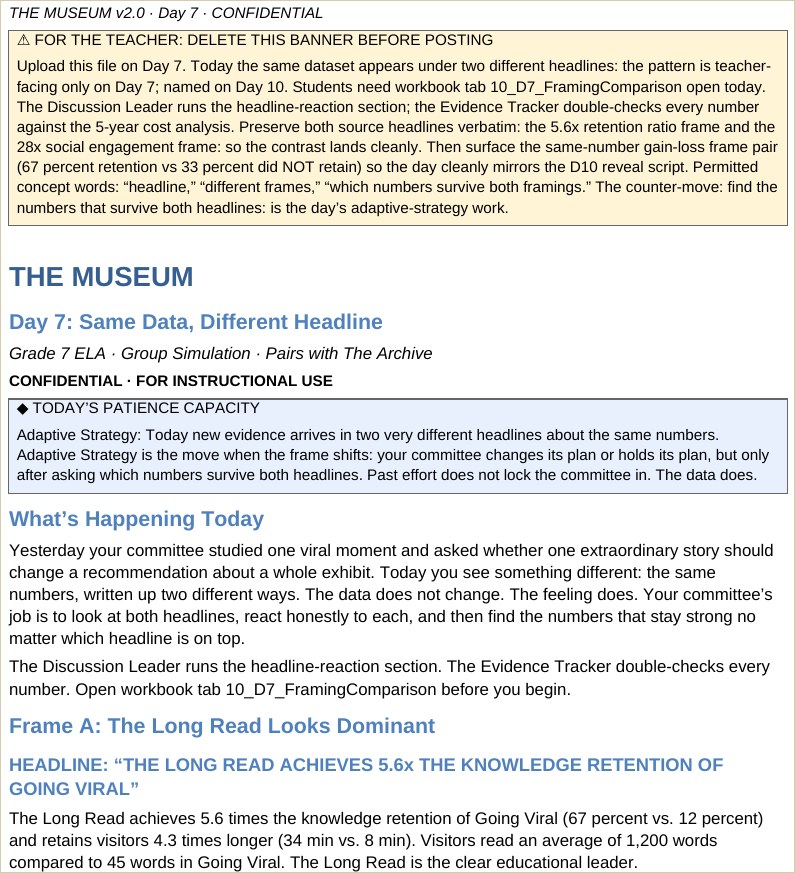
Your seventh graders are not summarizing a passage. They are an advisory board weighing real exhibit proposals, each with its own pitch, budget, and pilot data. The same exhibit can be sold as a crowd-pleaser or a community service, and the framing keeps nudging the vote. The teams who hold every proposal to the mission, not to the hype, choose the exhibit that earns it. That is critical reading with a decision attached.
Tap to read a proposal
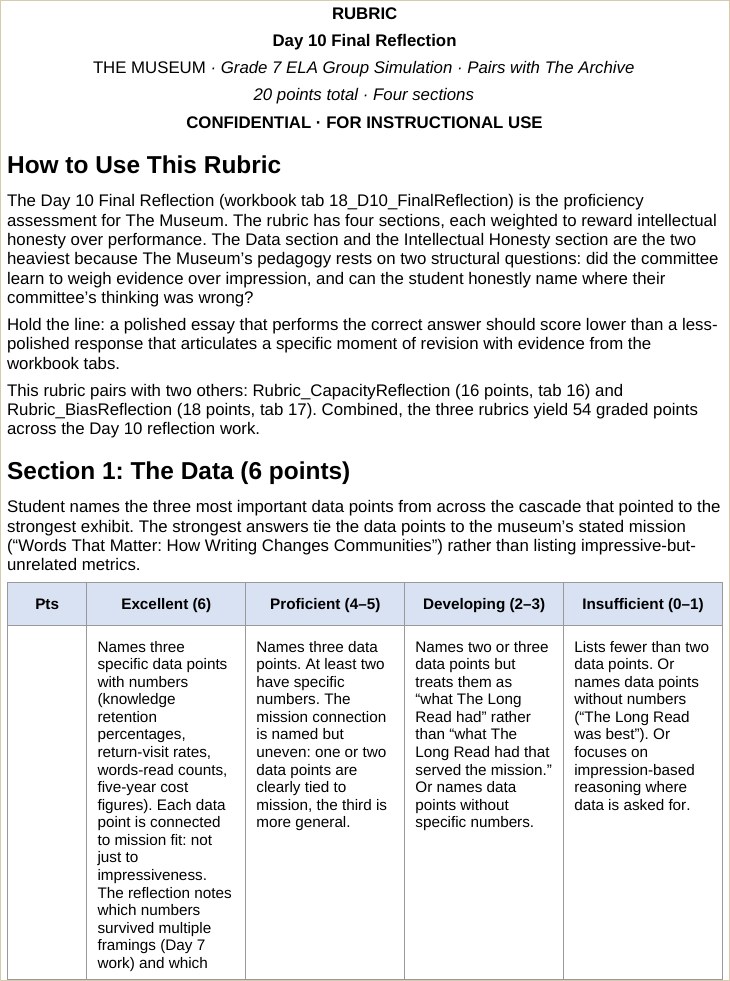
They are graded on their reasoning, not on which exhibit they pick.
Here is what surprises teachers. A team that picks the exhibit the designers intended is not graded higher than one that does not. There is no correct choice. Students are assessed on the quality of their reasoning, traced through their own daily journal. A defensible call that ran against the room scores higher than a popular one with no thinking behind it. That is how a seventh grader learns that a defensible judgment beats a popular one.
Tap to read the grading note
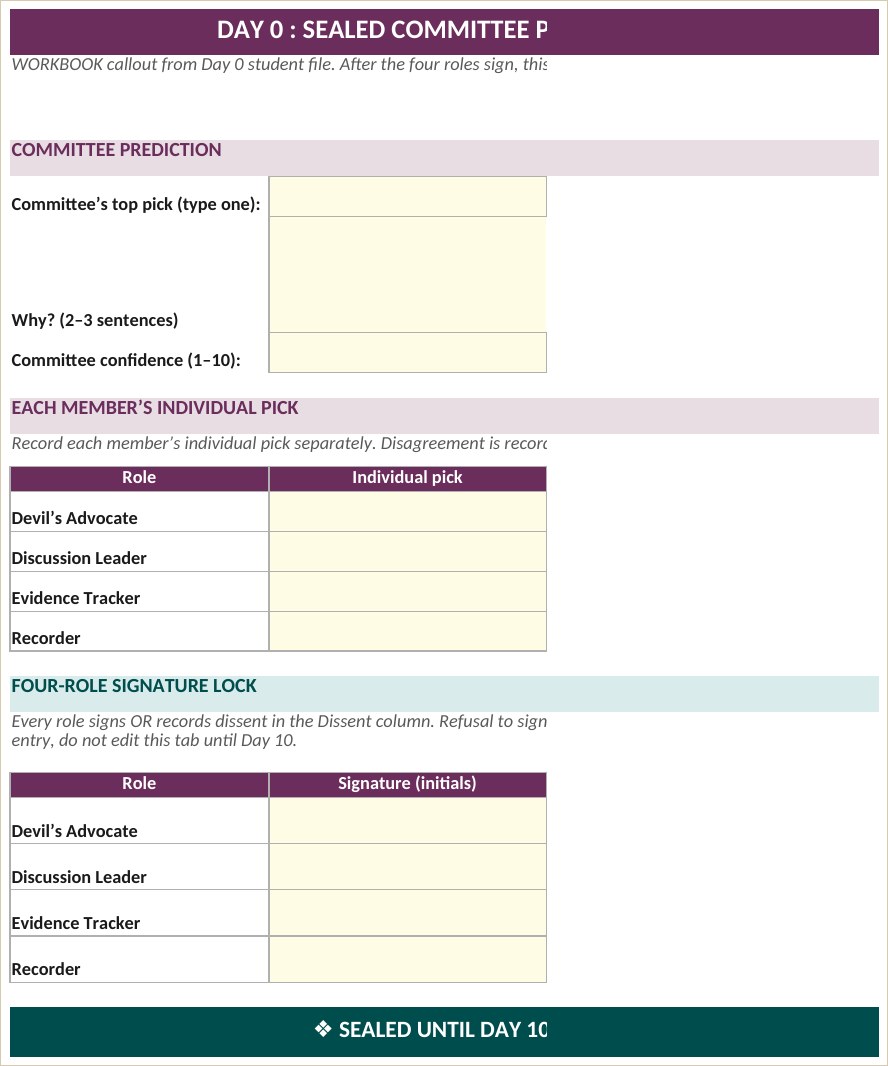
Let the workbook weigh the proposals.
The Museum comes with a workbook that lays out the proposals, the budgets, and the pilot data side by side. The team logs each piece of evidence, and the comparison builds across the ten days. Their attention stays on the hard part, which exhibit actually serves the mission, instead of on keeping the pitches straight.
Tap to see the comparison sheet
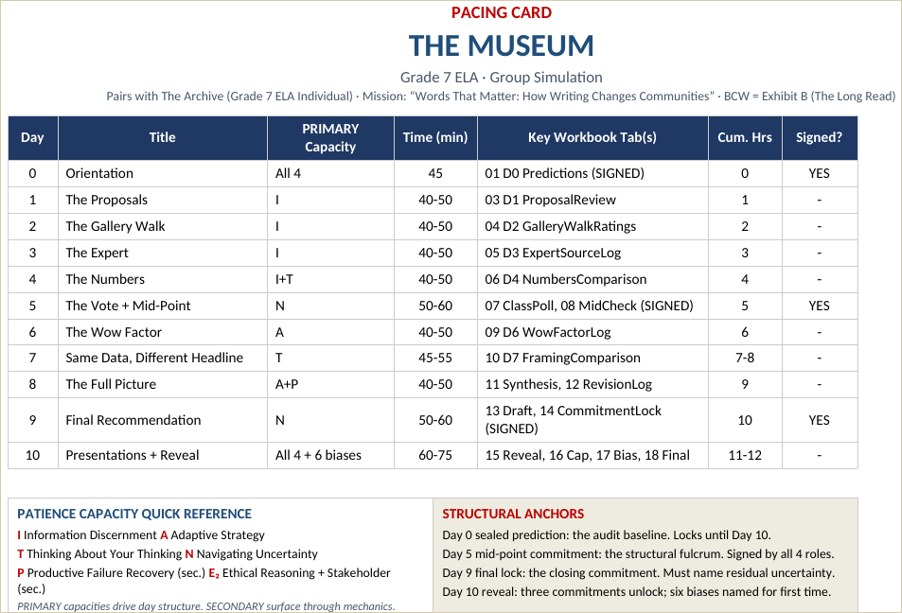
Every day is already scripted. You just run the room.
You do not need a museum or curation background to teach this. The guide scripts every day, names what students will likely say, and gives you exactly how to respond. The proposals, the budgets, and the final vote are all written for you. You bring the facilitation. The simulation brings everything else.
Tap to read the teacher guide
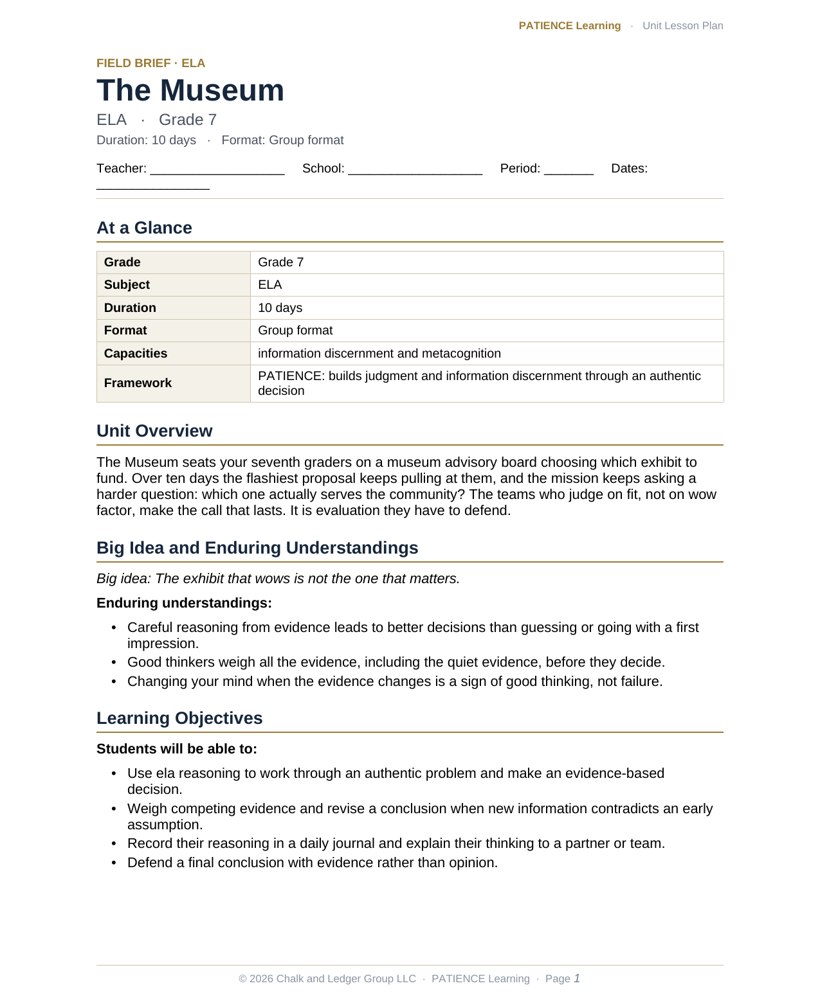
The lesson plan is already written.
Every simulation comes with a fully editable, admin-ready lesson plan. Standards alignment, daily pacing, learning objectives, differentiation, and an assessment plan are already done, so you can hand it to an administrator or adapt it to your district template in minutes.
Tap to preview the lesson plan
Close
Close
Close
Close
Everything you need to run it.
- An admin-ready lesson plan. A fully editable plan with standards alignment, daily pacing, differentiation, and assessment, ready to adapt to your district template. Included with every purchase.
- Eleven days of playbooks (Day 0 plus ten) that script every session.
- A student workbook that weighs proposals, budgets, and pilot data.
- Exhibit proposals, station posters, and a data reference that make the call real.
- Daily journals and a rubric that grade reasoning, not which exhibit they pick.
- Scaffolded student files for the early days, for readers who need more support.
- Built on the PATIENCE framework: information discernment and metacognition.
Bring The Museum to your classroom.
Ten days, fully planned, and a decision your students have to defend.
Get this simulationPreview real pages from the simulation before you spend a dollar. No guessing, no surprises.