The Budget
The emotional anecdote is not the budget case. The ledger is.
The emotional anecdote is not the budget case. The ledger is.
The Budget makes your seventh graders junior analysts allocating a public budget. Over ten days a vivid story keeps demanding money the data does not justify, and a quiet line item keeps making the stronger case. The students who follow the ledger over the anecdote, and change their minds when the evidence dictates, allocate well. It is civic reasoning with real trade-offs.
See what your students get, and why it lands.
No mockups. Every page below is real, pulled straight from the files you download. Tap any one to see it full size.
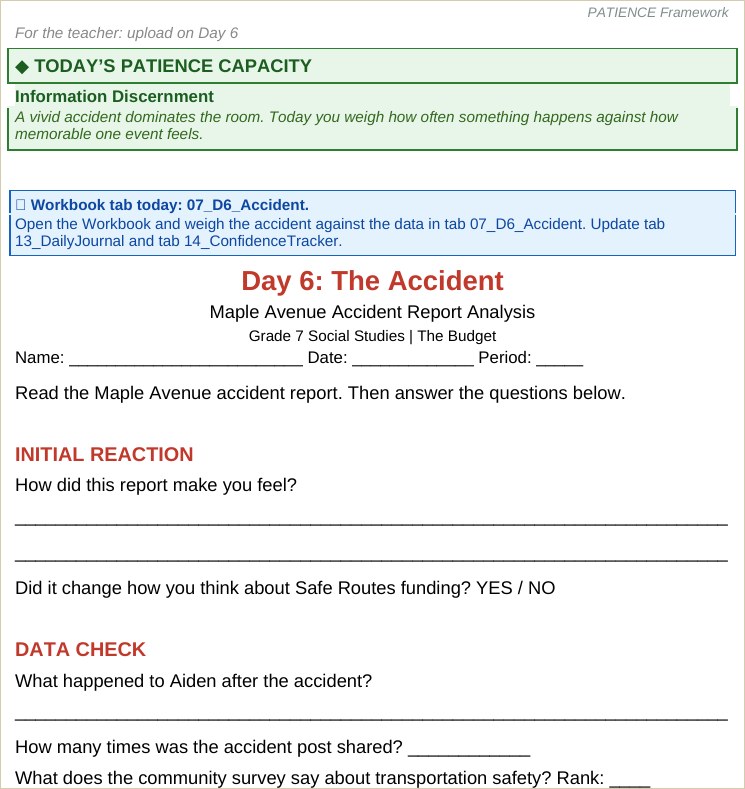
A worksheet was never going to teach this.
Your seventh graders are not reading a chapter about local government. They are junior analysts deciding where public money should go, weighing a dramatic incident against the numbers that tell a calmer, truer story. The emotional case is loud; the ledger is quiet. The analysts who let the evidence lead, even when it means changing their first impression, build a budget they can defend. That is civic reasoning, with a community depending on it.
Tap to read the evidence
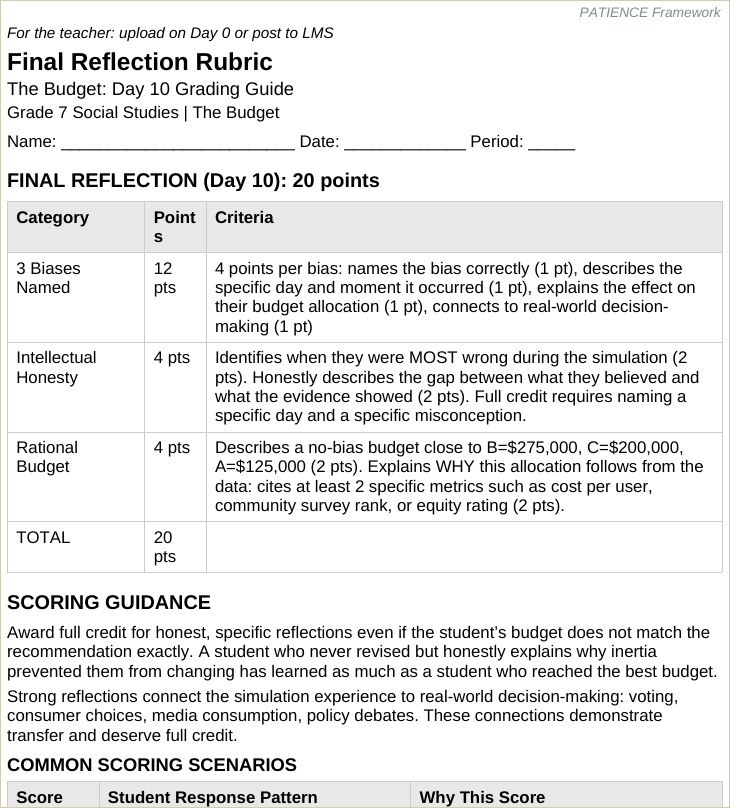
They are graded on their reasoning, not on the final budget.
Here is what surprises teachers. A student whose budget matched the intended one is not graded higher than one whose did not. There is no correct allocation. Students are assessed on the quality of their reasoning, traced through their own daily journal. A sound case that landed differently scores higher than a lucky match with no thinking behind it. That is how a seventh grader learns the intellectual humility to change a position when the evidence dictates.
Tap to read the grading note
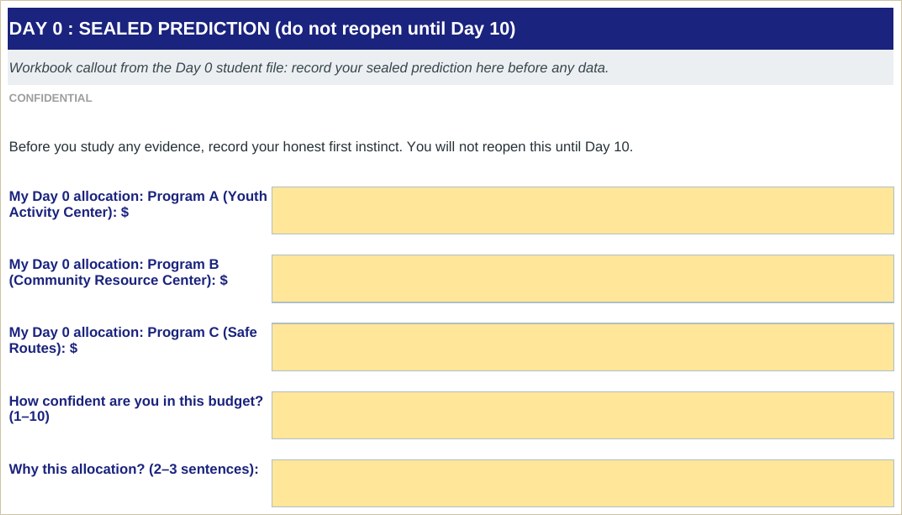
Let the workbook hold the ledger.
The Budget comes with a workbook that holds the ledger and updates the totals as the analyst makes each allocation. The numbers keep themselves across the ten days. Their attention stays on the real question, what the evidence actually justifies, instead of on the arithmetic.
Tap to see the ledger
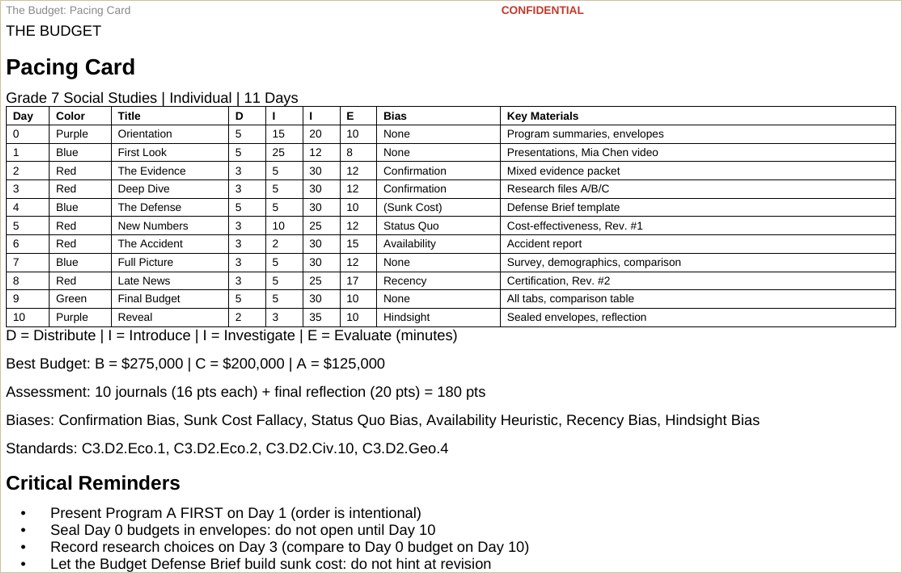
Every day is already scripted. You just run the room.
You do not need a public-finance background to teach this. The guide scripts every day, names what students will likely say, and gives you exactly how to respond. The evidence, the defense, the late news, and the final budget are all written for you. You bring the facilitation. The simulation brings everything else.
Tap to read the teacher guide
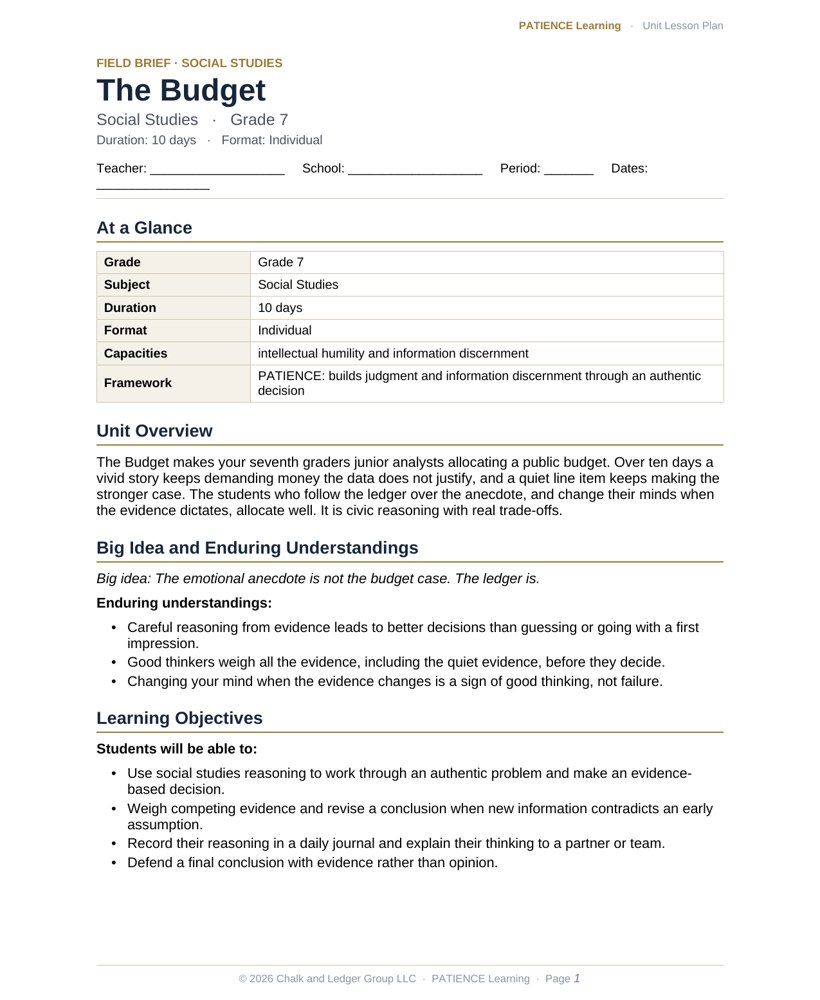
The lesson plan is already written.
Every simulation comes with a fully editable, admin-ready lesson plan. Standards alignment, daily pacing, learning objectives, differentiation, and an assessment plan are already done, so you can hand it to an administrator or adapt it to your district template in minutes.
Tap to preview the lesson plan
Close
Close
Close
Close
Everything you need to run it.
- An admin-ready lesson plan. A fully editable plan with standards alignment, daily pacing, differentiation, and assessment, ready to adapt to your district template. Included with every purchase.
- Eleven days of playbooks (Day 0 plus ten) that script every session.
- A student workbook that holds the ledger and tracks every allocation.
- Evidence files, a defense brief, and a data reference that complicate the easy story.
- Daily journals and a rubric that grade reasoning, not the final budget.
- Scaffolded student files for the early days, for learners who need more support.
- Built on the PATIENCE framework: intellectual humility and information discernment.
Bring The Budget to your classroom.
Ten days, fully planned, and a budget your students have to reason through.
Get this simulationPreview real pages from the simulation before you spend a dollar. No guessing, no surprises.