The Archive
The dramatic story is not the same as the record.
The dramatic story is not the same as the record.
The Archive puts your seventh graders inside a historical archive, reading document after document to reach a recommendation. Over ten days a vivid first impression pulls at them, the data complicates it, and a late discovery tests whether they will change their minds. It is close reading where the easy narrative is rarely the true one.
See what your students get, and why it lands.
No mockups. Every page below is real, pulled straight from the files you download. Tap any one to see it full size.
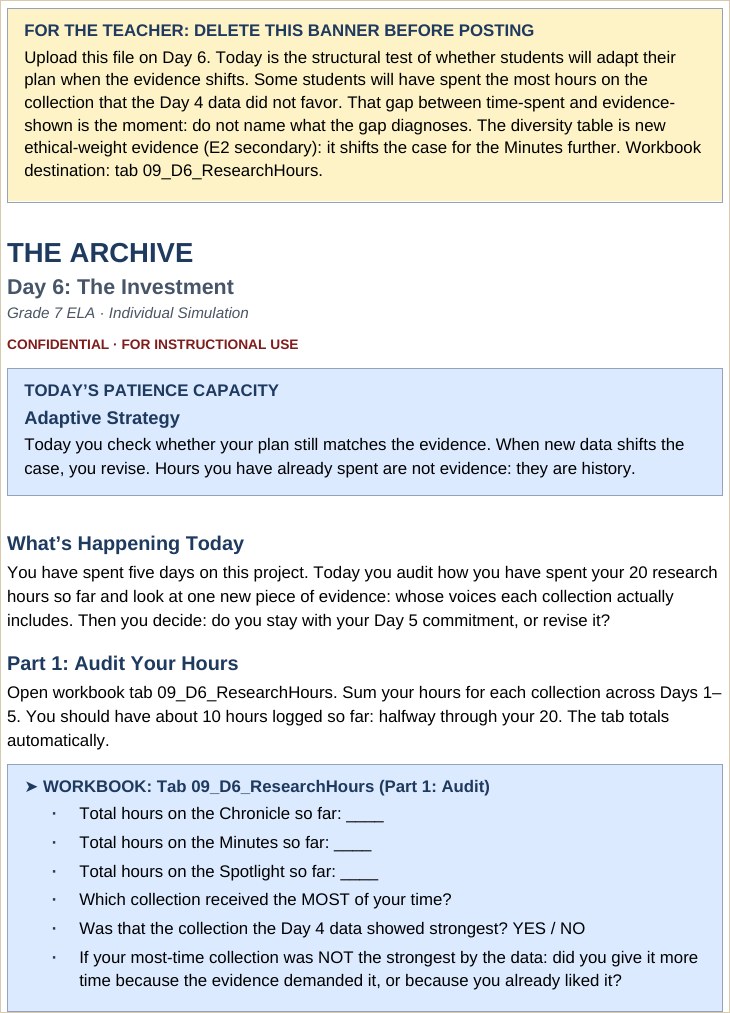
A worksheet was never going to teach this.
Your seventh graders are not answering comprehension questions. They are working an archive, reading sources across ten days to reach a recommendation that has to hold up. A dramatic excerpt lands early and sticks. Then the data arrives, and it does not match the story they already believed. The students who read for what a source actually establishes, not for what feels true, get closer to the answer. That is critical literacy with a real call attached.
Tap to read a document
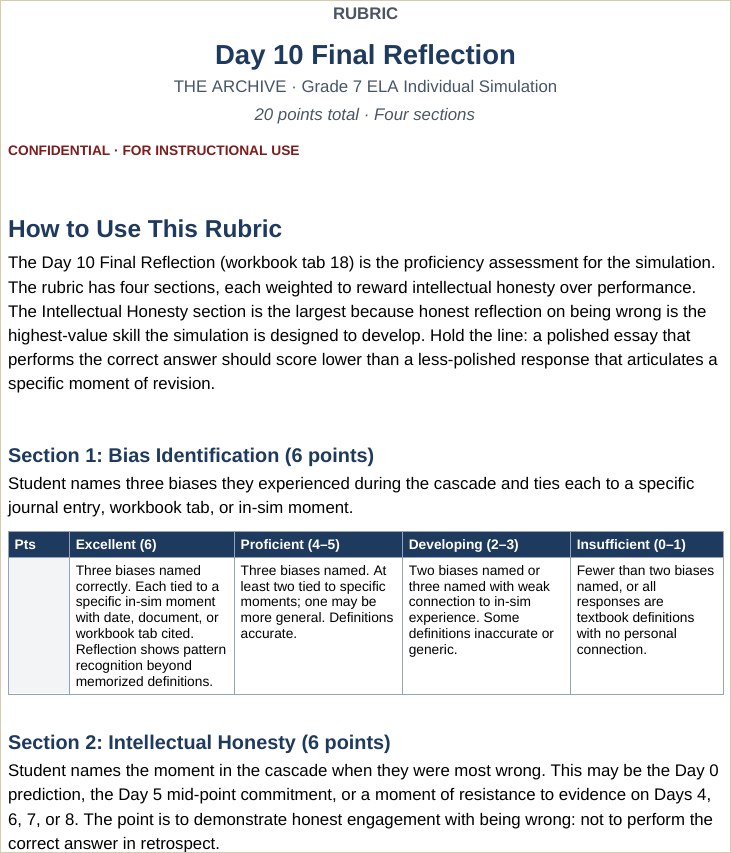
They are graded on their reasoning, not on the recommendation.
Here is what surprises teachers. A student who lands on the right recommendation is not graded higher than one who does not. The verdict is not the point. Students are assessed on the quality of their reasoning, traced through their own daily journal. A careful read that arrived at the wrong answer scores higher than a lucky guess. That is how a seventh grader learns that how you reason matters more than whether you guessed right.
Tap to read the grading note
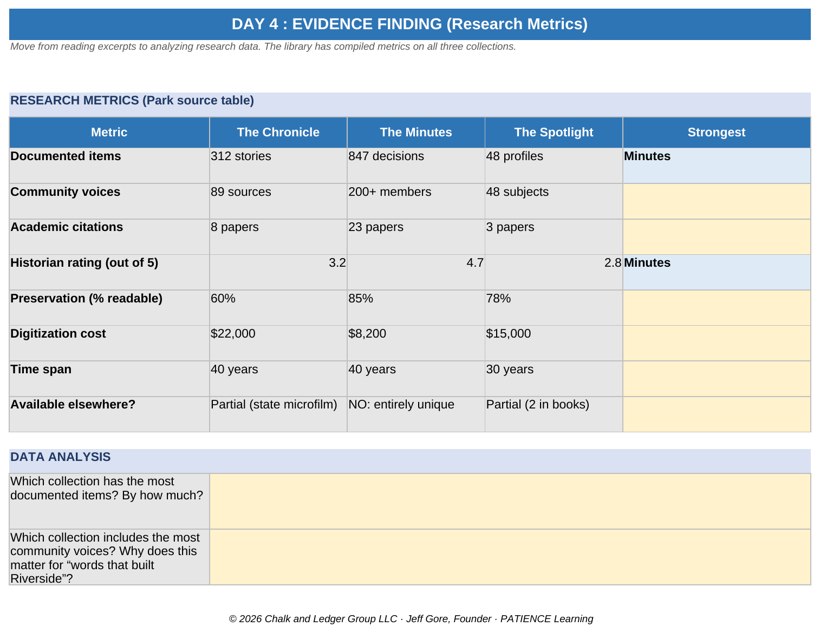
Let the workbook hold the record.
The Archive comes with a workbook that tracks every source, every claim, and what each one actually supports. The student logs what they read, and the record builds across the ten days. Their attention stays on the hard part, which sources hold up, instead of on keeping the documents straight.
Tap to see the source tracker
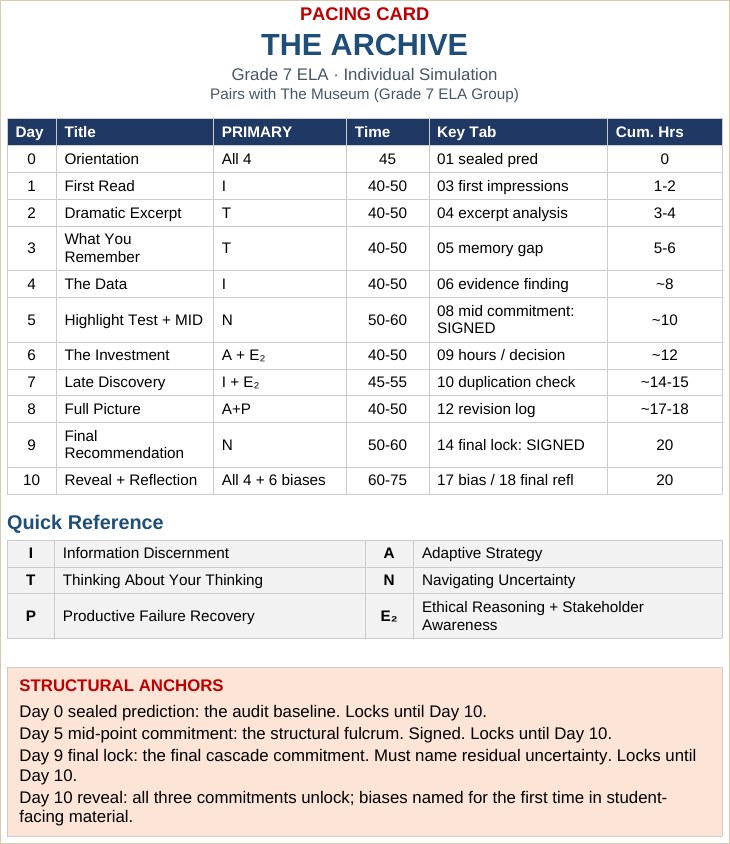
Every day is already scripted. You just run the room.
You do not need a background in archival research or cognitive bias to teach this. The guide scripts every day, names what students will likely say, and gives you exactly how to respond. The documents, the data, and the late discovery are all written for you. You bring the facilitation. The simulation brings everything else.
Tap to read the teacher guide
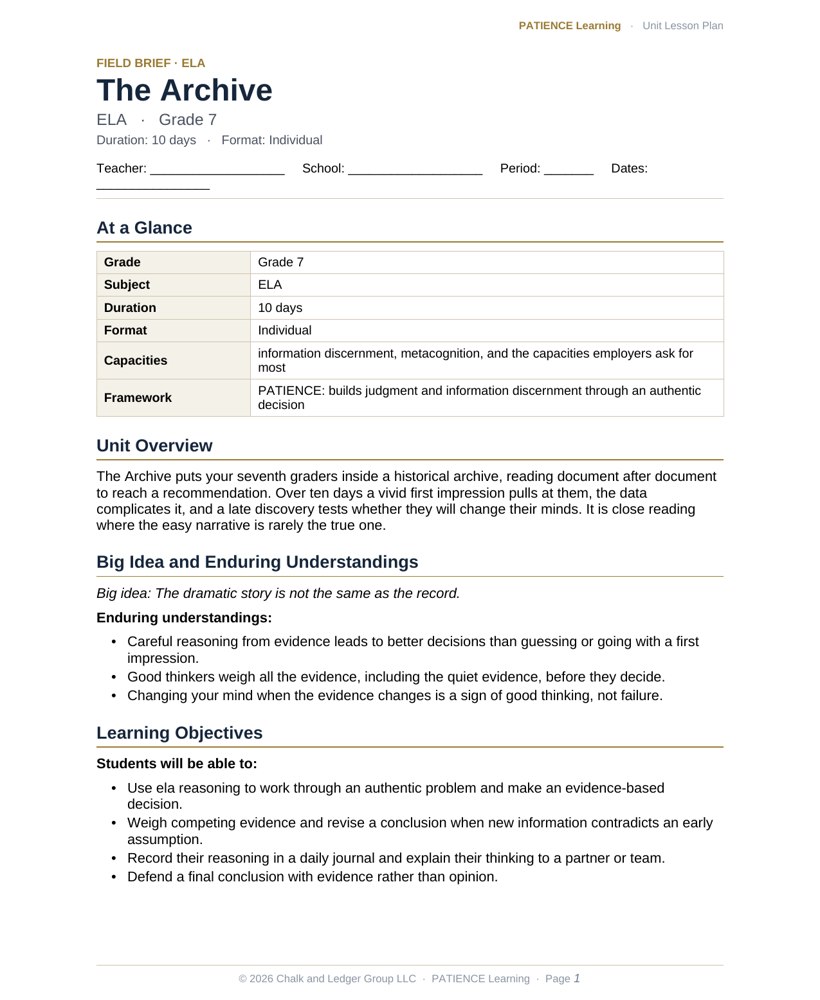
The lesson plan is already written.
Every simulation comes with a fully editable, admin-ready lesson plan. Standards alignment, daily pacing, learning objectives, differentiation, and an assessment plan are already done, so you can hand it to an administrator or adapt it to your district template in minutes.
Tap to preview the lesson plan
Close
Close
Close
Close
Everything you need to run it.
- An admin-ready lesson plan. A fully editable plan with standards alignment, daily pacing, differentiation, and assessment, ready to adapt to your district template. Included with every purchase.
- Eleven days of playbooks (Day 0 plus ten) that script every session.
- A student workbook that tracks sources, claims, and what each one supports.
- Document sets and a data reference, including the discovery that breaks the story.
- Daily journals and a rubric that grade reasoning, not the recommendation.
- Scaffolded student files for the early days, for readers who need more support.
- Built on the PATIENCE framework: information discernment, metacognition, and the capacities employers ask for most.
Bring The Archive to your classroom.
Ten days, fully planned, and a recommendation your students have to earn.
Get this simulationPreview real pages from the simulation before you spend a dollar. No guessing, no surprises.